Direct answer
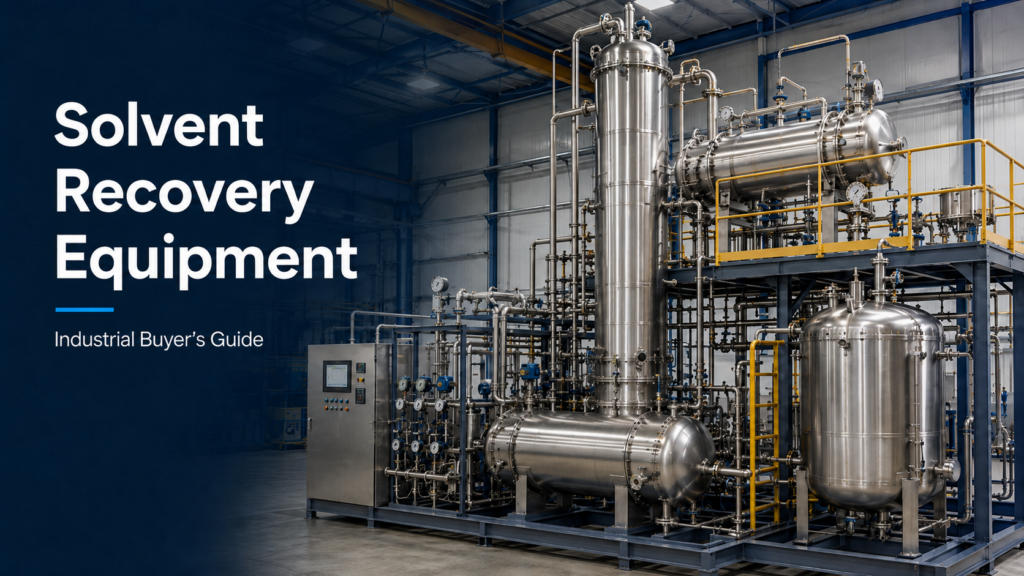
Solvent recovery equipment is used in industrial settings to reclaim solvents from waste streams for reuse. These systems help reduce the volume of new solvent purchases, lower hazardous waste disposal costs, and assist in meeting environmental compliance standards. Engineers, procurement managers, and plant operators selecting a solvent recovery machine or solvent recovery unit should consider how the equipment fits their process needs and waste characteristics.
How solvent recovery equipment works
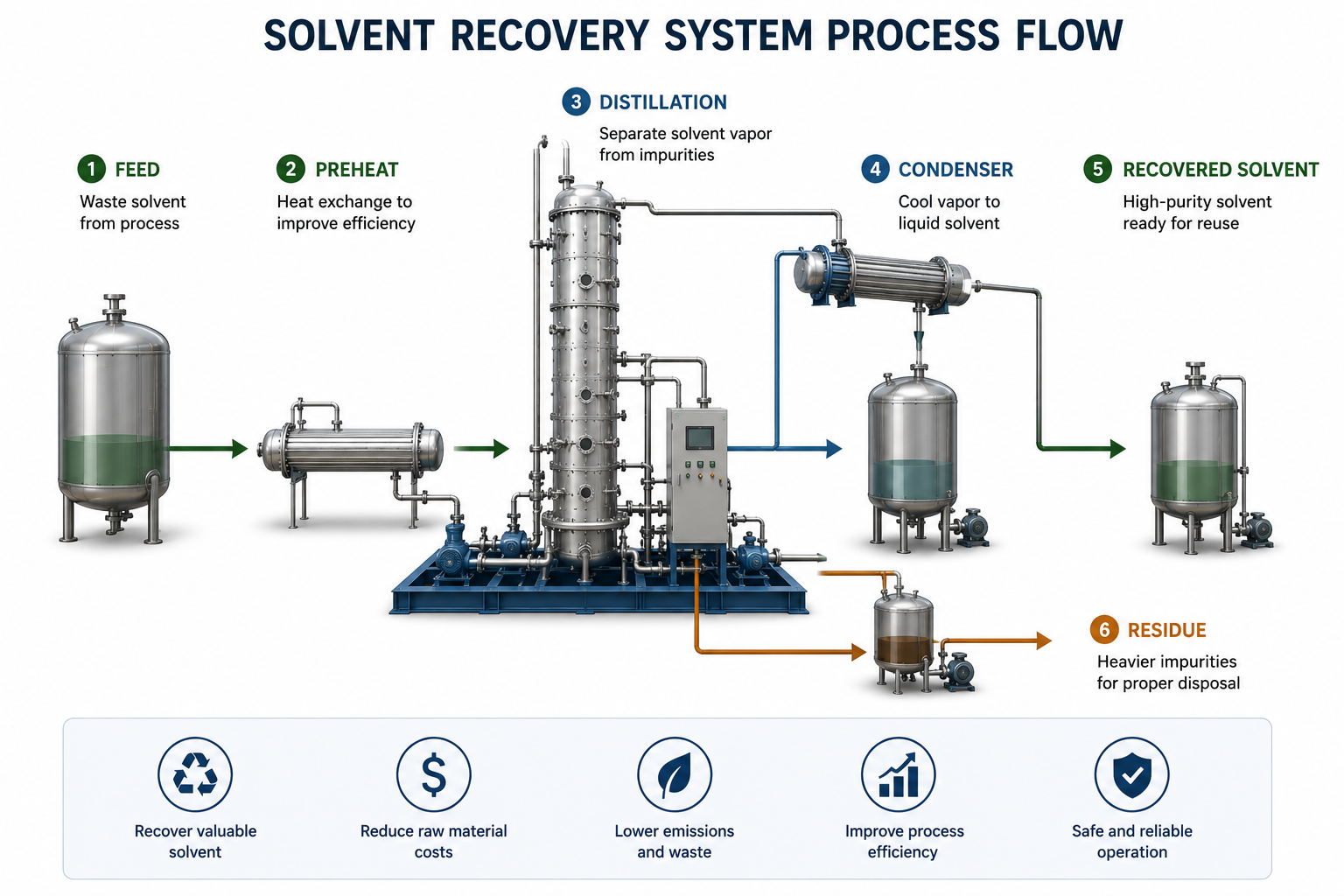
Solvent recovery equipment typically operates by distillation. Contaminated solvents collected from production or cleaning processes are heated in a chamber to vaporize the solvent. The vapor passes through a condenser where it cools and returns to liquid form. This process separates purified solvent from residues and impurities that remain behind or are collected as waste. The recovered solvent can then be reused, reducing the need to buy new solvent.
Some solvent recovery units use fractional distillation when multiple solvents or higher purity levels are required. Vacuum assisted distillation is applied for heat sensitive or heavier solvents to lower boiling points and protect solvent quality. Additional stages such as filtration or centrifugation may be included to remove solids or fine contaminants. Proper residue handling after recovery is important for hazardous waste management to ensure safe disposal and regulatory compliance.
Solvent recyclers are commonly applied in chemical manufacturing, parts washing, and coatings industries where solvents like isopropyl alcohol are used. The suitability of a particular solvent recovery system depends on the level of contamination present and the purity requirements for reuse in the same process.
Closed loop operation helps contain volatile vapors within the system and gives the plant a clearer way to manage vapor exposure during recovery. The design must still match the solvent, ventilation layout, and local safety requirements.
How to characterize a solvent waste stream before equipment selection
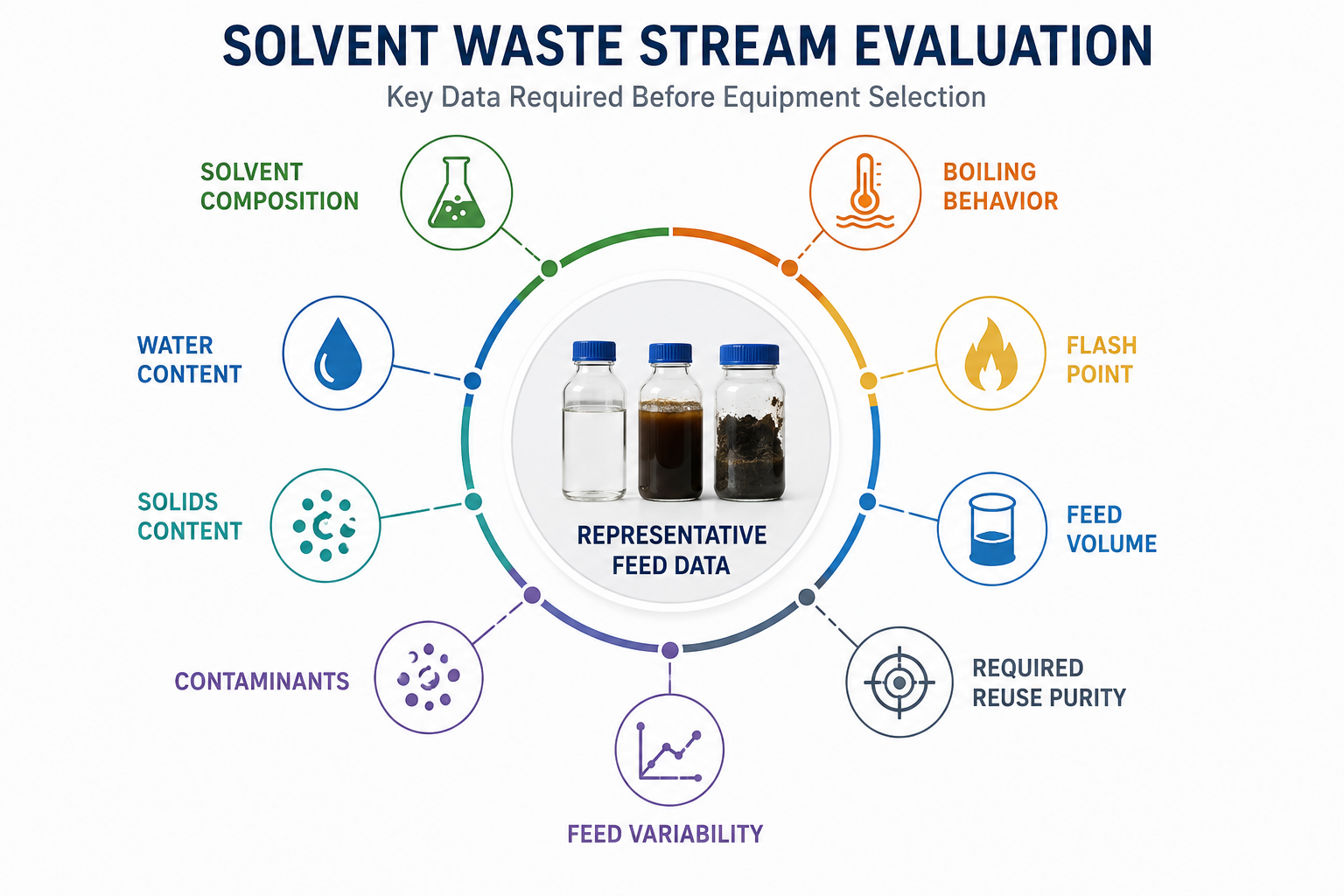
Before selecting solvent recovery equipment, it is important to thoroughly characterize the solvent waste stream. This includes identifying the types of solvents present, their approximate concentrations, and the nature and levels of contaminants such as solids, oils, or dissolved materials. Understanding the variability of the waste stream over time is also necessary to ensure the chosen system can handle fluctuations in composition and volume.
Sampling should be representative samples of typical operations, capturing variations during different production runs or cleaning cycles. Laboratory analysis and physical property testing can establish parameters such as boiling behavior, flash point, and the presence of heat sensitive or reactive components. This information helps determine whether simple distillation is sufficient or if more advanced separation methods like fractional distillation or vacuum distillation are required.
Feed variability and what samples to send for evaluation
Variability in solvent waste can impact the performance and design of solvent recovery systems. It is advisable to collect multiple samples over time to capture changes in solvent composition, contaminant types, and concentrations. Samples should include both liquid and any sludge or residue that accumulates.
Representative samples may be requested where laboratory testing is required. Sampling, packaging, and transport should follow applicable dangerous goods and laboratory handling requirements. Safety data sheets, composition data, laboratory analysis reports, and process information should be reviewed first.
How feed properties affect system configuration
The design and configuration of solvent recovery equipment must consider the boiling points of solvents and contaminants, which determine the required heating temperatures. Operating temperatures influence energy consumption and the risk of heat related fouling or polymerization.
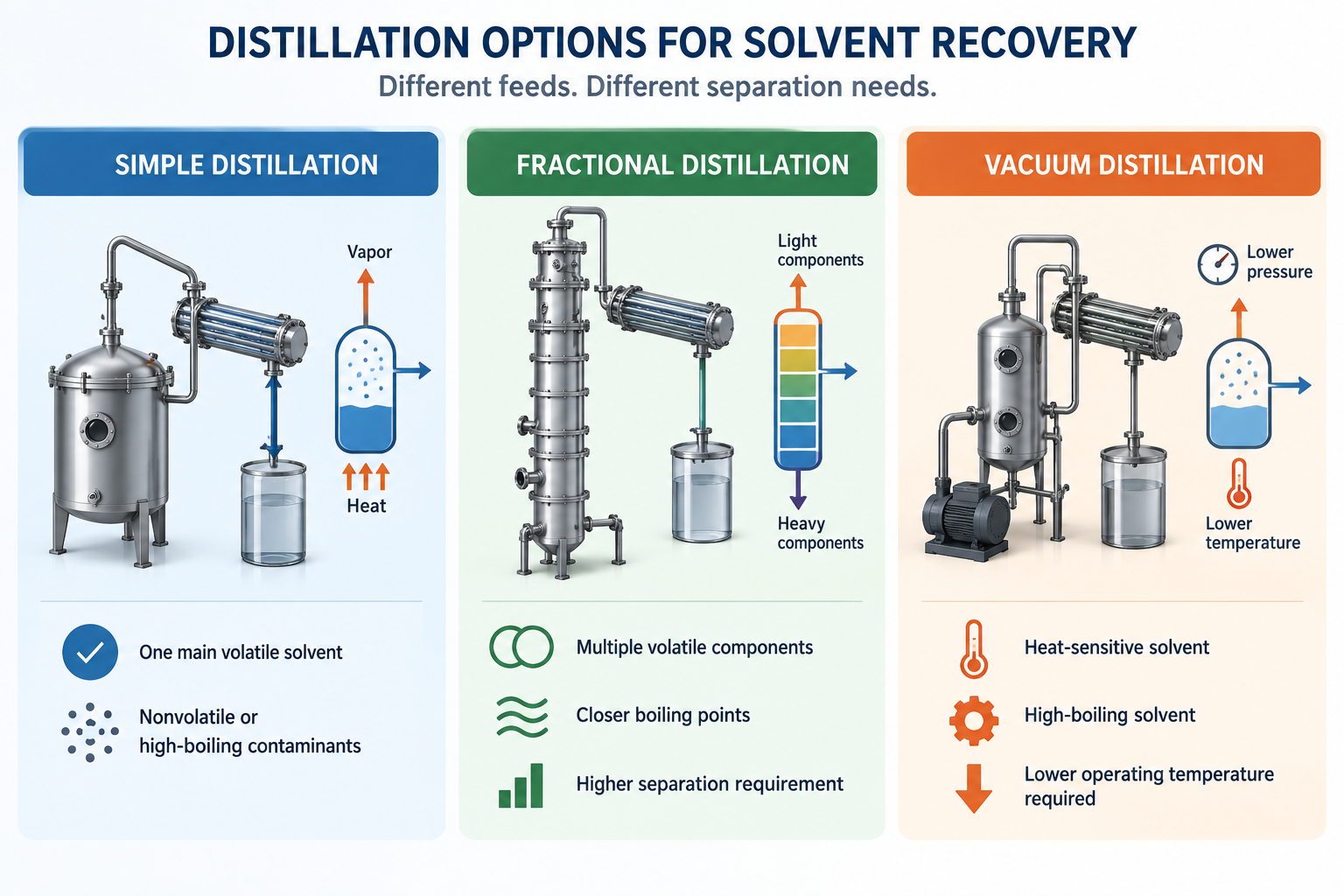
Vacuum operation capability allows distillation at lower temperatures, protecting heat sensitive materials and reducing fouling. Condenser design must accommodate the vapor load and ensure efficient condensation to prevent solvent losses.
Residue behavior is also important. Some residues form sludges that settle at the bottom of the boil sump and require periodic removal. Others may be sticky or corrosive, influencing the choice of materials and cleaning procedures. Proper residue handling provisions are necessary to maintain safe hazardous waste management. Materials of construction should be selected for solvent compatibility, corrosion risk, and cleaning requirements.
Batch solvent recovery workflow
Batch solvent recovery machine machines process fixed volumes of solvent waste per cycle. Loading involves transferring contaminated solvent into the boil sump, ensuring the quantity matches the system capacity. Operators must monitor fill levels to avoid overfilling or running the system dry.
After distillation, the residue is removed manually or by automated means, depending on the system design. Cleaning the boil sump and other contact surfaces is typically required between batches to prevent contamination carryover and maintain recovery efficiency.
Batch systems require downtime between cycles for loading, distillation, residue removal, and cleaning. Scheduling and workflow planning are necessary to optimize throughput and minimize operational interruptions.
Continuous system controls and integration
Continuous solvent recovery unit units allow solvent waste to be fed and recovered solvent to be withdrawn simultaneously. These systems often include automated controls for feed rate, temperature, pressure, and solvent purity.
Integration with existing manufacturing or cleaning processes may involve piping connections, automated valves, and communication with plant control systems. Continuous systems may also feature alarms and interlocks for safety and process monitoring.
Operators should be trained to manage control systems and respond to alarms. Regular calibration and validation of sensors and controls help maintain consistent solvent recovery performance.
Site requirements for solvent recovery equipment
Before installing solvent recovery equipment, site conditions must be evaluated to ensure compatibility. Utilities such as electrical power, steam, or compressed air should meet equipment requirements. Ventilation is necessary to manage any fugitive solvent vapors and maintain a safe working environment.
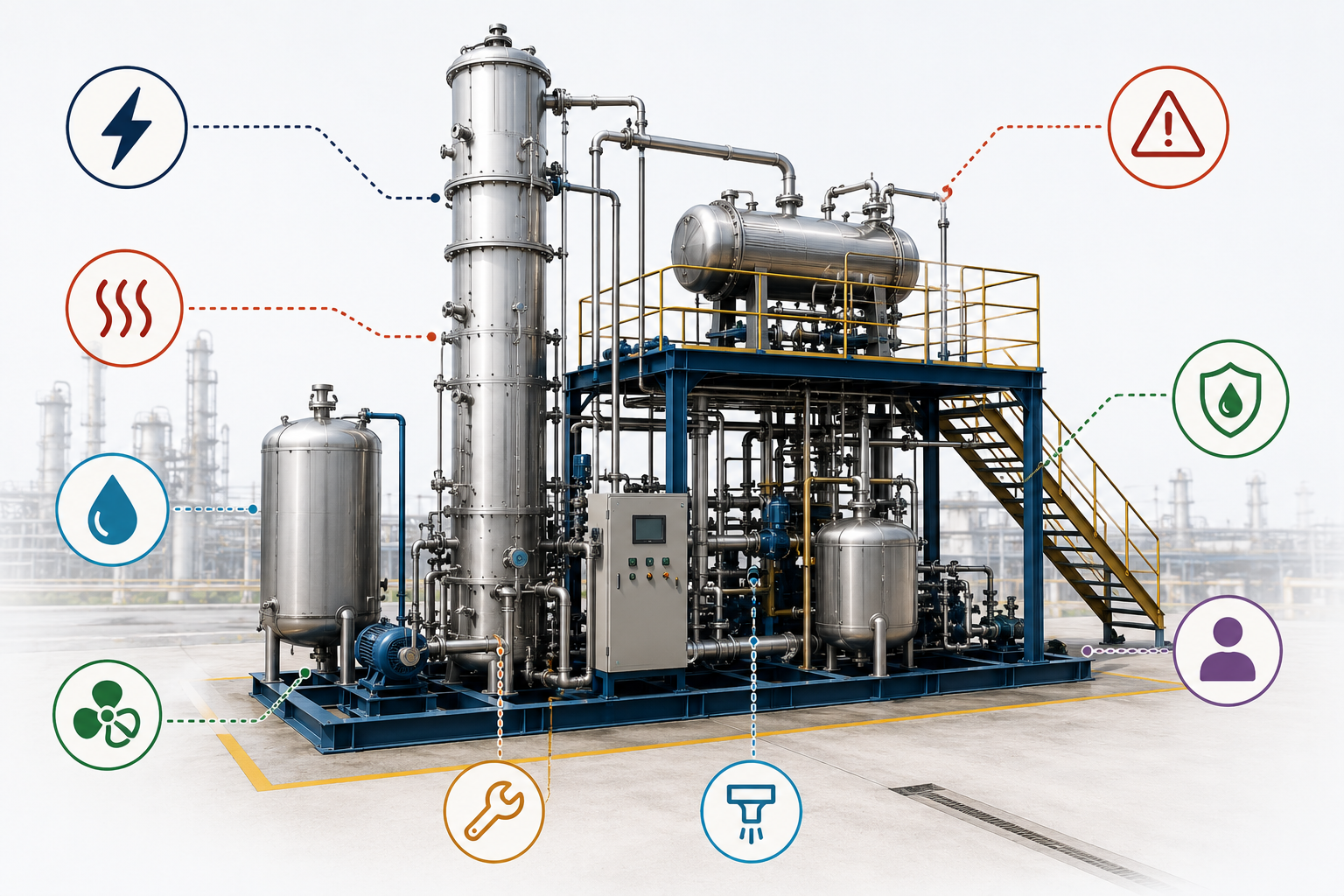
The site should provide suitable containment, collection, and handling arrangements for spills, cleaning liquids, and process residues in accordance with local waste management requirements. Electrical equipment and instrumentation must be selected according to the hazardous area classification and applicable local standards.
Space availability and layout affect equipment footprint and operator accessibility for loading, cleaning, maintenance, and emergency response. Adequate lighting and ergonomic considerations contribute to safe operation.
How to calculate solvent recovery roi
Evaluating the economics of solvent recovery equipment involves several factors. Savings come from reduced solvent purchase cost by recovering a portion of the solvent waste. The recovery yield depends on the solvent type, waste composition, and system efficiency.
Waste disposal costs decrease as less hazardous waste is generated. Energy consumption varies with the heating method and operating temperatures. Labor costs include operator time for loading, monitoring, residue removal, and cleaning.
Maintenance expenses cover routine servicing, replacement parts, and potential downtime. Downtime impacts production schedules and may incur indirect costs.
The calculation should be based on the quantity of recovered solvent that actually meets the plant’s reuse specification, rather than the total distillate produced.
A simple cost model compares the total expenses of solvent purchases and waste disposal without recovery against the costs of operating the recovery system. This helps determine the payback period and informs investment decisions.
Commissioning and acceptance criteria
Commissioning solvent recovery equipment involves verifying that all components function according to design specifications. Acceptance criteria include achieving target solvent recovery rates, purity levels, and compliance with the agreed project specifications and applicable safety requirements.
Performance tests should document operating temperatures, pressures, vacuum levels, and control system responses. Leak test and electrical inspections ensure safe operation.
Records of commissioning activities provide a baseline for future maintenance and troubleshooting. Operator training completion and procedural documentation are also part of the acceptance process.
Solvent recovery equipment maintenance warning signs
Regular maintenance is necessary to sustain solvent recovery equipment performance. Warning signs of issues include reduced solvent recovery yield, longer cycle times, unusual noises, leaks, or increased energy consumption.
Corrosion or residue buildup in the boil sump or condenser can impair function. Faulty sensors or controls may cause process instability. Prompt attention to these signs prevents costly repairs and downtime.
Scheduled inspections and cleaning help maintain equipment reliability and safety.
Batch versus continuous solvent recovery comparison
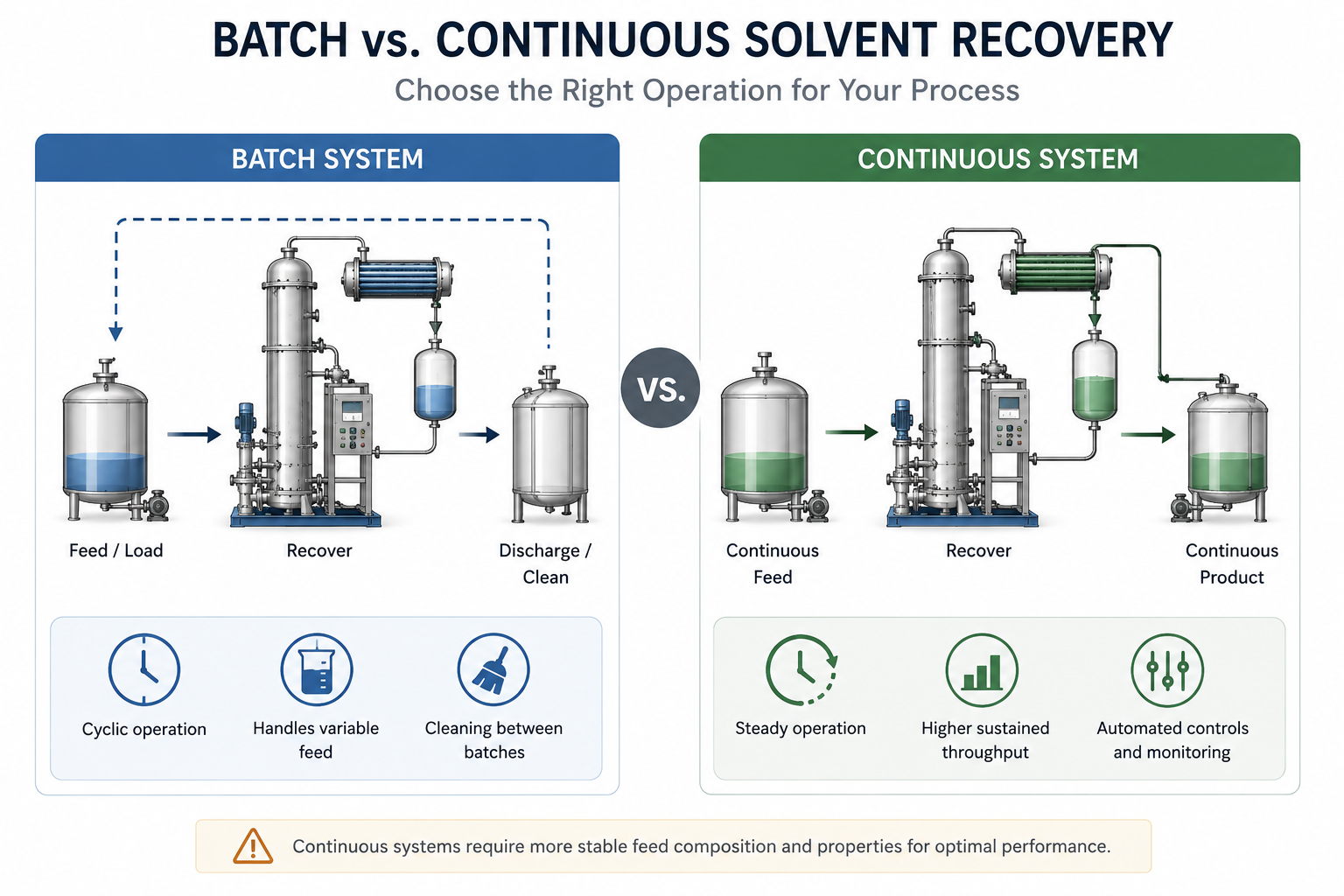
| Feature | Batch solvent recovery machine | Continuous solvent recovery unit |
|---|---|---|
| Operation | Processes fixed quantities of solvent waste at a time | Allows ongoing solvent input and recovery continuously |
| Throughput | Suitable for small to medium volumes | Better suited for large scale industrial solvent recovery |
| Equipment complexity | Simpler design, easier to operate | More complex, includes automation and control systems |
| Product consistency | Product composition may change during the batch and depends on the cut strategy and operating conditions | Can provide more stable product quality when feed composition and operating conditions remain consistent |
| Maintenance | Requires downtime between batches for cleaning | Suitable for longer operating campaigns, with planned shutdowns required for cleaning and maintenance |
| Cost | Lower initial investment | Higher initial cost but may offer savings at high volumes |
Frequently asked questions
What solvents can be recovered?
Many industrial solvent streams can be treated by solvent recovery equipment, but recoverability depends on solvent composition, volatility, contaminants, thermal stability, and the required reuse specification.
How pure is the recovered solvent?
Recovered solvent purity depends on feed composition, separation difficulty, equipment configuration, and operating conditions. Some streams can achieve high reuse purity by fractional distillation, while azeotropic or difficult mixtures may require additional separation steps. The separation is based on the vapor-liquid equilibrium (VLE) of the components.
Is solvent recovery equipment costly?
Initial investment varies. Savings on solvent purchases and waste disposal usually offset costs over time, but payback depends on usage and solvent prices.
Can solvent recovery machines handle flammable or hazardous solvents?
Yes, solvent recovery units are designed with safety features and comply with regulations to manage flammable and hazardous solvents.
What is the difference between batch and continuous systems?
Batch systems process fixed volumes of solvent waste and are simpler to operate. Continuous systems run continuously and are better suited for high volume solvent recovery.
Contact GreenDistill for project evaluation
For an initial project evaluation, provide GreenDistill with the solvent composition, water and solids content, waste volume, required recovered solvent specification, operating hours, and available utilities. These inputs help determine the preliminary recovery route, equipment configuration, and whether batch or continuous operation is more suitable. Get in touch with us today for your solvent recovery needs!