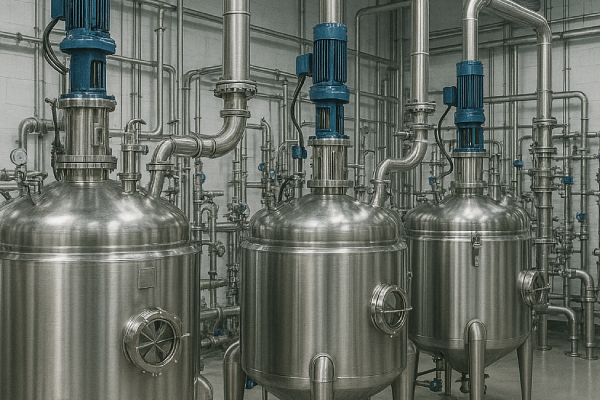
Reaction Solvent Recovery
Recovery of DMF, NMP and DMSO from pesticide synthesis and work-up streams for on-spec reuse.
Industries:
Agrochemicals
Pesticide Synthesis
Intermediates
99.5%+
Purity
0.5–5t/h
Capacity
≥98%
Recovery

Generates a centrifugal force field 100s of times stronger than gravity, creating micro-droplets and ultra-thin liquid films.
Increases mass transfer rate by 1-3 orders of magnitude.
Recovers latent heat from overhead vapor to heat the reboiler.
Reduces energy consumption by 40-60% compared to conventional columns
Wide flow channels combined with high shear force prevent fouling from tars and solids.
Volume is only 15% of a traditional tower; handles “dirty” mother liquors effectively
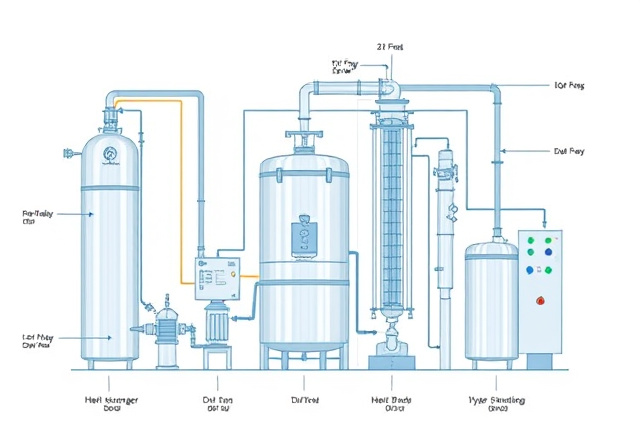
VHPS integrates into your process to improve quality and cut energy, waste, and emissions.
Recovery of DMF, NMP and DMSO from pesticide synthesis and work-up streams for on-spec reuse.
Agrochemicals
Pesticide Synthesis
Intermediates
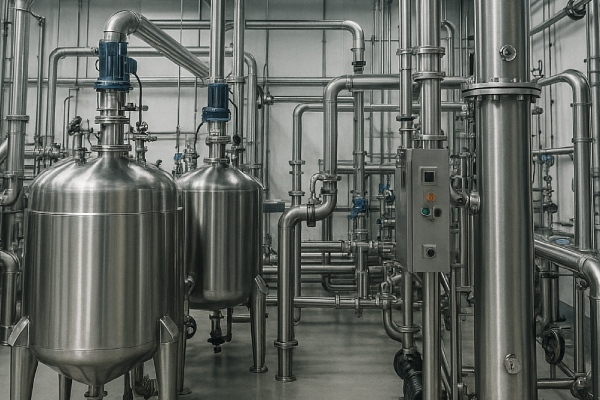
Recovery of DMF/NMP, methanol and pesticide intermediates from crystallization and washing mother liquors while cutting waste volume.
Technical Actives
Mother Liquors
Oleochemicals
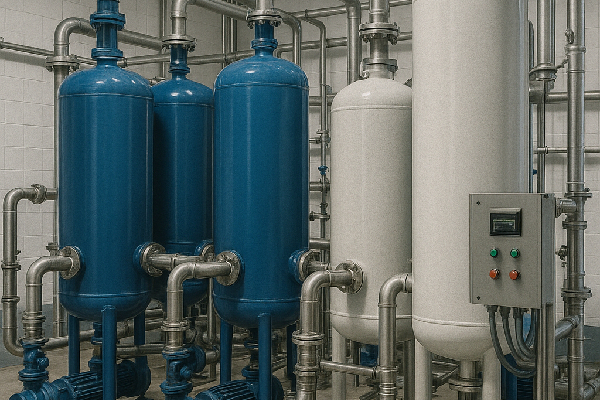
Recovery of methanol, DMF, NMP and DMSO from high-salt process wastewater with significant COD reduction.
Utilities
Resins
Process Wastewater
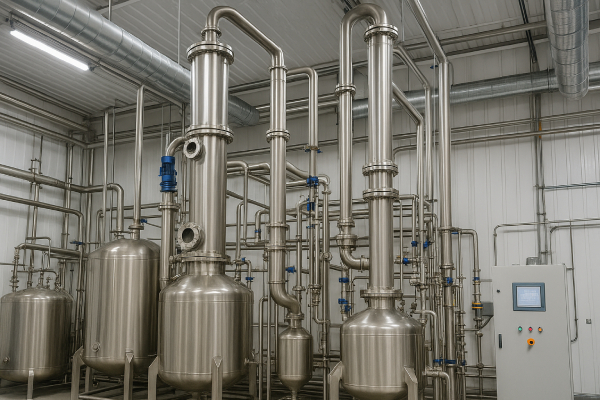
Solvent recovery from organic synthesis, methylation reactions, and extraction processes.
Extraction
Agrochemicals
Wastewater Treatment
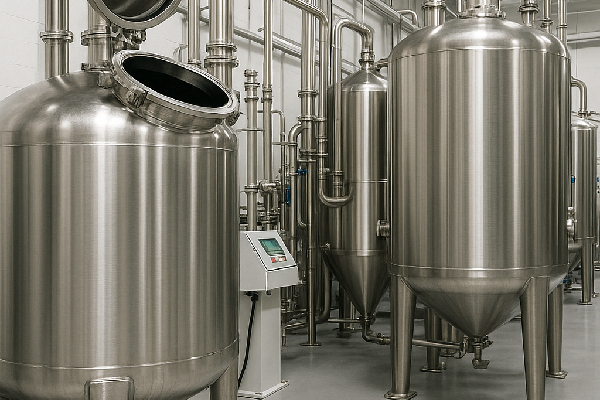
Methanol recovery from process wastewater, cleaning solutions, and contaminated streams.
Residues
Intermediates
Mother Liquors
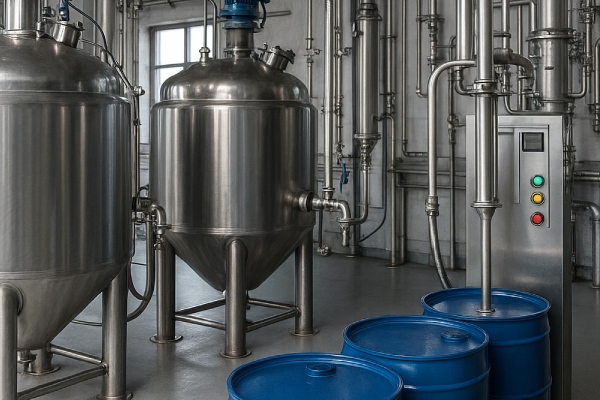
Solvent recovery from tarry, high-viscosity pesticide intermediate residues using wide, anti-plugging VHPS flow channels.
VOC Control
EC/SL
Formulations
Solvent / Stream | Typical Source in Agrochemicals | Key Issues / Pollutants | VHPS Treatment Goal | Example Performance |
DMF-rich mother liquors (20–50% DMF) | Washing & crystallization mother liquors from pesticide synthesis | High COD, color, thermal degradation risk | Low-temperature recovery of DMF with clear color and high purity | DMF purity ≥ 99.5%; color improved; solvent recovery ≥ 98% |
NMP process wastewater (30–60% NMP) | NMP used as reaction solvent and in synthesis mother liquors | High boiling point, high viscosity, high energy demand | Energy-efficient NMP recovery with reduced vacuum and steam consumption | NMP purity ≥ 99.5%; energy use ↓ 30–50%; recovery ≥ 98% |
DMSO reaction / extraction solvents | DMSO for heat-sensitive synthesis and extraction routes | Strong hygroscopicity, oxidation, high boiling point | Deep dehydration and purification to low water content, preventing oxidation | DMSO purity ≥ 99.0%; water to very low ppm; stable color |
High-concentration pesticide intermediates | Tar-like, viscous, solids-rich mother liquors and residues | High viscosity, fouling, plugging of conventional packing | Anti-fouling recovery of valuable solvents from dirty, viscous streams | Solvent recovery ≥ 95%; stable operation without frequent cleaning |
Mixed cleaning / formulation solvent blends | Esters, ketones, alcohols from formulation lines & tank cleaning | Mixed solvents, high COD, variable composition | Recover reusable solvent blend and reduce COD load to the ETP | COD reduction 30–60%; solvent reuse fraction increased |
High-COD / high-salt agrochemical effluents | Neutralization, salting-out and side streams around synthesis | High COD, high salt, complex organics | Concentrate and condition streams for COD/volume reduction or ZLD pretreatment | Volume reduction 50–80%; COD reduction 30–50% |
Toluene / xylene in emulsified wastewater | Aromatic extraction, phase-split and wastewater streams | Emulsions, oil-in-water, BTEX toxicity | Break emulsions, separate oil/water and reduce aromatics in water | Oil phase recovered; BTEX in water ≤ 200 ppm (typical) |
Chlorinated solvents (DCM / TCM, 20–60%) | Chlorinated reaction solvents and waste liquors | Thermal decomposition, acid formation, corrosion | Low-temperature separation to high purity with low acid value | Purity ≥ 99.0%; acid value low; solvent recovery ≥ 95–98% |
Discover why industry leaders trust us to solve their most complex separation challenges.




Yes. VHPS hypergravity heat-pump distillation systems are specifically designed for DMF recovery, NMP recovery and DMSO dehydration from agrochemical and pesticide plant streams. The unit handles reaction mother liquors, crystallization mother liquors and process wastewater, delivering on-spec solvent for reuse and reducing fresh solvent consumption.
Yes. VHPS agrochemical solvent recovery units use wide, anti-plugging flow channels and strong turbulence in the hypergravity field to treat high-viscosity pesticide intermediates, tarry residues and high-salt streams. This allows you to recover valuable solvents while minimizing fouling and unplanned shutdowns.
In typical agrochemical solvent recovery service, VHPS hypergravity heat-pump distillation delivers about 30–50% lower energy consumption than conventional columns or multi-effect evaporators. At the same time you get higher solvent recovery (often ≥95–99%) and a smaller footprint, which is critical for brownfield pesticide plants.
A VHPS agrochemical distillation system is supplied as a compact skid that ties into your existing DMF/NMP recovery columns, DMSO lines and methanol or polar-solvent wastewater treatment. We perform a process study, utility check and control integration so the VHPS unit runs safely with your current reactors, storage tanks and effluent treatment plant, usually without major civil works.