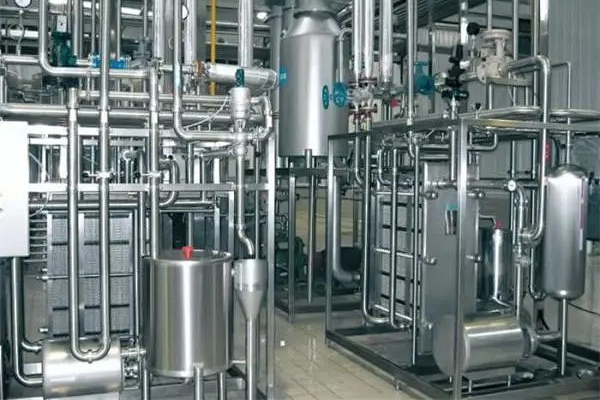
Fermentation Solvent Recovery
Recovery of ethanol, IPA and methanol from fermentation broth off-gas, condensate and extraction steps for reuse.
Industries:
Fermentation
Solvent Recovery
Bioprocess
99.5%+
Purity
0.3–3 t/h
Capacity
≥98–99%
Recovery

Generates a centrifugal force field 100s of times stronger than gravity, creating micro-droplets and ultra-thin liquid films.
Increases mass transfer rate by 1-3 orders of magnitude.
Upgrades latent heat from overhead vapor to drive the reboiler, recycling thermal energy within the system.
Reduces energy consumption by 40-60% compared to conventional columns
Wide flow channels combined with high shear force prevent fouling from tars and solids.
Reduces equipment volume by up to 90% (1/10th size of towers).
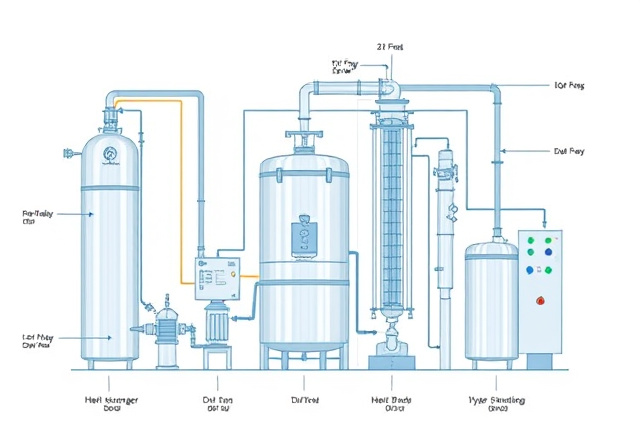
From vaccine production to peptide synthesis, VHPS delivers validated purity.
Recovery of ethanol, IPA and methanol from fermentation broth off-gas, condensate and extraction steps for reuse.
Fermentation
Solvent Recovery
Bioprocess
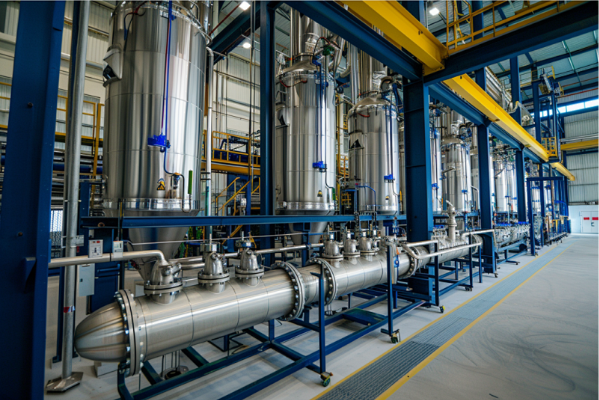
Closed-loop recovery of acetonitrile, DMSO, DMF and NMP from API synthesis and work-up streams.
APIs
Intermediates
Solvent Loops
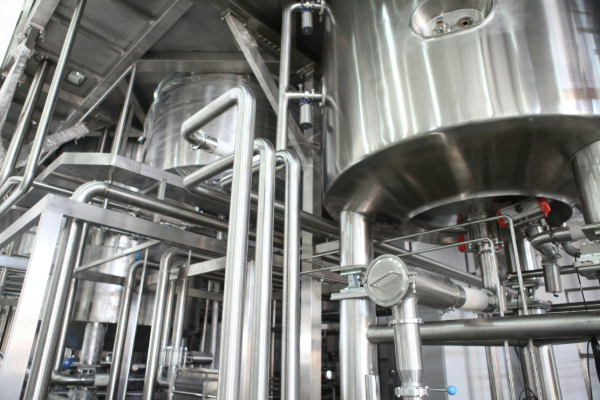
Recycling of ethanol, methanol and acetonitrile from chromatography eluents and gradient streams.
Chromatography
Eluents
Recycling
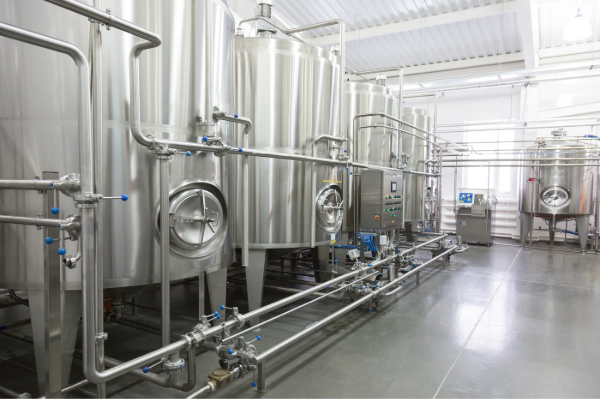
Dehydration of ethanol–water, IPA–water and acetonitrile–water mixtures to reach low water specifications or near-azeotropic quality.
Dehydration
Azeotropes
Solvent Conditioning
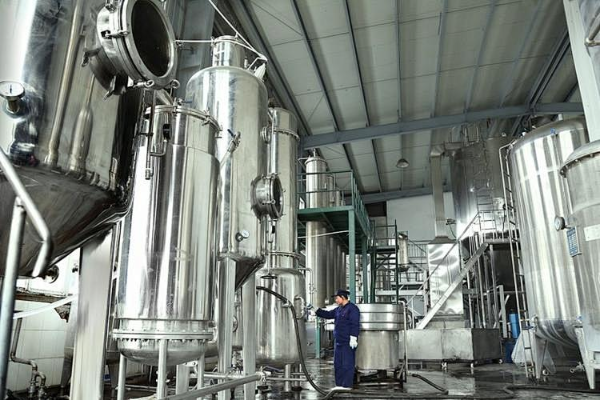
Concentration of solvent-rich cleaning solutions and process side streams to recover organics and reduce COD.
Cleaning
Side Streams
Waste Reduction
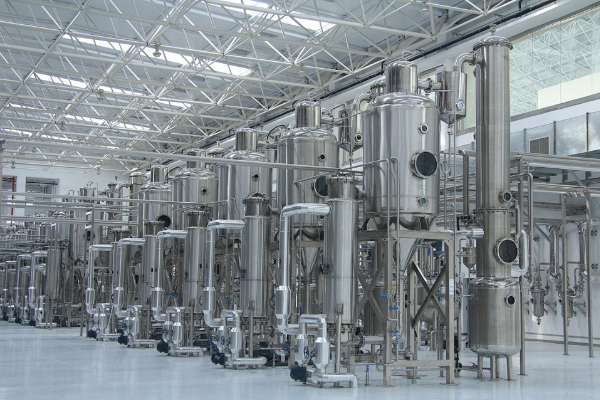
Pretreatment of biopharma wastewater containing alcohols, ketones and polar solvents before biological treatment.
Wastewater
Utilities
Pretreatment
Solvent / Stream | Typical Source in Biopharma | Key Issues / Pollutants | VHPS Treatment Goal | Example Performance |
Ethanol (pharma / injectable grade) | Protein / mAb precipitation, vaccine formulation | Aldehydes, water, bioburden / endotoxin | Recover to high-purity ethanol with low aldehydes and moisture | Ethanol ≥ 99.5%; aldehydes ≤ 10 ppm; water controlled |
Cell-culture grade DMSO | Cell freezing, gene delivery, cryopreservation | Water, dissolved metals, cytotoxic degradation products | Deep dehydration and impurity removal for cell-culture grade | DMSO ≥ 99.95%; metals ≤ 1 ppm; water ≤ 50 ppm |
Acetone | Membrane protein extraction, dehydration steps | Peroxides, moisture, color bodies | Regenerate acetone for reuse, control peroxides and moisture | Acetone ≥ 99.8%; peroxides “Not detected”; low water |
THF (peroxide-forming) | Peptide synthesis, polymer drug carriers | Peroxide formation, water, safety risk | Provide anhydrous, low-peroxide THF under inert conditions | THF ≥ 99.8%; water ≤ 200 ppm; peroxides ≤ 5 ppm |
Ethyl acetate | API extraction and purification | Hydrolysis to acid, moisture pickup | Maintain high purity, low acid value and stable API quality | Ethyl acetate ≥ 99.7%; acid ≤ 50 ppm |
DCM (dichloromethane) | Intermediate purification, reaction work-up | Acidic/genotoxic residues, color | Remove acidic and genotoxic impurities to meet ICH Q3C limits | DCM ≥ 99.5%; low acid value; ICH-compliant impurity profile |
IPA / methanol cleaning solvents | Equipment / column cleaning, CIP side streams | High COD, water content, mixed contaminants | Recover reusable solvent, reduce COD load to wastewater system | Solvent recovery ≥ 95–99%; COD reduction 30–60% |
High-COD mother liquors & side streams | Fermentation, purification, chromatography waste | Solvents + organic load, color, high COD | Concentrate organics, recover solvents, reduce COD and volume | Volume reduction 50–80%; COD reduction 30–60% |
High-salt / buffer-rich process liquids | Chromatography, buffer exchange, downstream processing | High salt/buffer, water load, large volumes | Concentrate streams, reduce water for reuse or ZLD preparation | Volume reduction 50–70%; suitable feed for polishing / ZLD |
Discover why industry leaders trust us to solve their most complex separation challenges.




Yes. VHPS systems for biopharma can be supplied with 316L, hygienic piping, CIP/SIP options and documentation to support cGMP, IQ/OQ and regulatory inspections.
Yes. VHPS hypergravity distillation operates with short residence times and controlled temperatures, making it suitable for heat-sensitive solvents (like DMSO, DMF, acetonitrile) and processes where product stability is critical.
In typical fermentation solvent recovery, API solvent loops and aqueous solvent dehydration, VHPS delivers around 30–50% lower energy consumption compared with conventional columns or multi-effect evaporation.
VHPS is installed as a compact skid connected to fermentation condensers, chromatography solvent tanks or API work-up units. Feed and product tie-ins are kept simple, so you can boost solvent recovery and reduce wastewater load with minimal impact on your existing process.