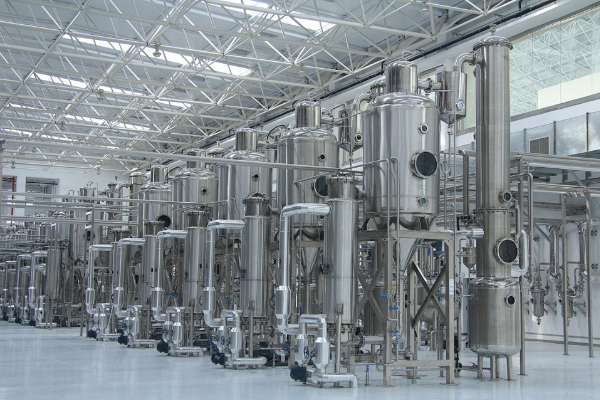
VHPS CO₂ Capture Solvent Regeneration & Reclaiming

The next evolution in Amine Regeneration. Replace massive desorption towers with compact VHPS units to cut regeneration energy by 30-50% and extend solvent life.

  • 0%

    Methanol Purity

  • < 0 ppm

    Solvent Loss

  • 0 %

    Energy Reduction

Request CO₂ Capture Assessment

CO₂ Capture Solvent Challenges You’re Facing

Widespread adoption of carbon capture is stalled by high operating costs and massive equipment footprints. Traditional packed towers are no longer the answer.

High Regeneration Energy

Amine regeneration and reclaimer duties consume huge amounts of low-pressure steam and power.
Impact: CO₂ capture becomes a major OPEX and carbon-intensity driver.

Corrosion, Fouling & Foaming

Metals, solids and degradation products cause corrosion, fouling and foaming in columns and equipment.
Impact: Shorter run lengths, unplanned outages and higher maintenance cost.

Amine, NH₃ & Aerosol Emissions

Amine slip, NH₃ and aerosols in treated flue gas face tightening emission limits.
Impact: Regulatory penalties and negative environmental perception.

Complex Solvent Blends & Advanced Formulations

Blends with piperazine, MDEA, AMP and other additives have narrow operating windows and strict purity limits.
Impact: Conventional batch reclaimers struggle to maintain consistent solvent quality.

Solvent Degradation & Heat-Stable Salts

Oxygen, SOx/NOx and impurities form degradation products and heat-stable salts in amine loops.
Impact: Solvent capacity falls, corrosion risk rises and make-up cost escalates.

Brownfield Space & Retrofit Constraints

Existing CO₂ capture units and power plants have limited space for additional reclaimers and towers.
Impact: Upgrading solvent management is difficult without disruptive, high-cost projects.

The Cost of Inefficient Processing

High Steam Cost

Regeneration consumes ~40% of plant power output.

Rapid Degradation

Thermal stress destroys expensive amine solvents.

No Space Left

Giant towers prohibit retrofitting existing factories.

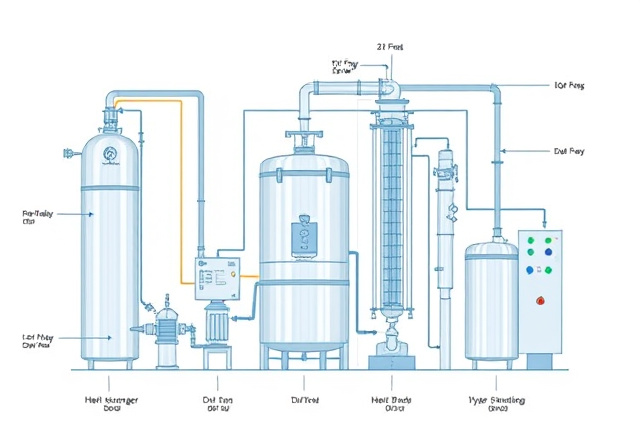
The VHPS Advantage: Hypergravity + Heat Pump

A revolutionary "Five-in-One" synergy of High Gravity (HiGee), Energy Looping, and Intelligent Control.
  • ypergravity Mass Transfer

    Intensifies the gas-liquid contact area by 100x, allowing for a much smaller device to achieve the same stripping efficiency.

    Reduces equipment volume by 80-90% for easy retrofit.

  • Heat-Pump Driven Regeneration

    Upgrades low-grade latent heat from the overhead vapor to heat the reboiler, creating a highly efficient thermal loop.

    Reduces regeneration energy consumption by 30-50%.

  • Solvent Protection Mode

    Short residence time (seconds) and lower operating temperatures prevent thermal degradation of MEA/MDEA.

    Extends solvent lifespan and reduces replacement costs.

Technical Specifications

Capacity Range
0.3 – 5 t/h
Product Purity
up to ≥99.5
Solvent Recovery Rate
typically ≥98–99%
Temperature Range
typically 80–160°C
Operating Pressure
typically 100–500 mbar
Typical Services
amine reclaiming, solvent regeneration, side-stream purification, waste amine volume reduction
Typical Solvents
MEA, DEA, MDEA,Piperazine-promoted, AMP, formulated amines,Advanced CO₂ capture solvents and blends

Performance Comparison

Get Technical Datasheet

Proven CO₂ Capture & CCUS Applications

Optimizing chemical absorption for Power, Cement, Steel, and Chemical industries.

  • Multiple tall stainless steel evaporators and distillation columns with pumps and piping in a bright, clean industrial production hall

    Cement & Lime CO₂ Capture

    Removal of dust, metals and degradation products from cement and lime kiln CO₂ capture solvents.

    Industries:

    • Cement

    • CCS

    • Dust & Metals

    Lower

    Corrosion

    Longer

    Run Lengths

    Stable

    Solvent Quality

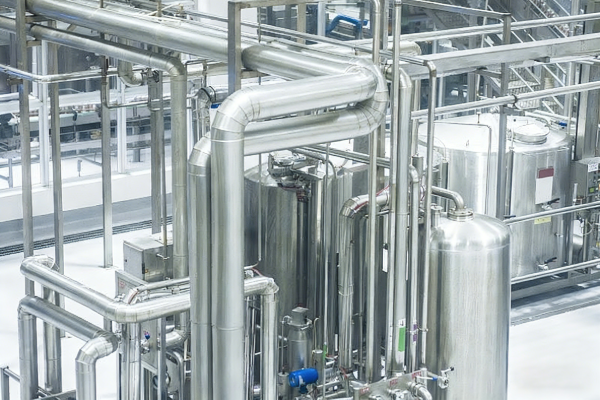
  • Close-up of stainless steel pipes, tanks and process equipment inside a bright, clean industrial production facility

    Steel & Refining CO₂ Capture

    VHPS reclaiming for CO₂ capture systems on blast furnace gas, reformer gas and refinery flue gas.

    Industries:

    • Steel

    • Refining

    • CCUS

    Less

    Foaming

    0.5–10 t/h

    Capacity

    Reduced

    Heat-Stable Salts
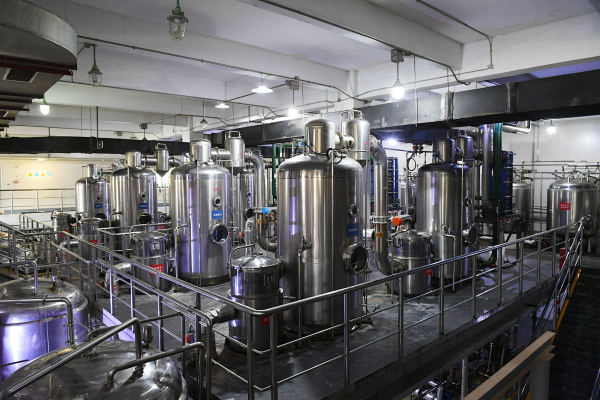
  • Wide view of a modern industrial hall with large stainless steel tanks, piping and process equipment under a high metal roof

    Pilot & Demo Solvent Systems

    Flexible VHPS systems for pilot/demonstration plants testing new CO₂ capture solvents and blends.

    Industries:

    • Pilot

    • New Solvents

    • Flexibility

    Wide

    Solvent Window

    0.3–1 t/h

    Capacity

    Fast

    Changeover
  • Multiple stainless steel process vessels and columns on an elevated platform with walkways, piping and lighting inside a modern industrial processing facility

    Power Plant Amine Reclaiming

    Side-stream VHPS reclaiming for MEA/MDEA systems on coal and gas-fired power plant CO₂ capture units.

    Industries:

    • Power

    • MEA/MDEA

    • Reclaiming

    30–50%

    Energy Savings

    30–60%

    Less Solvent

    50–80%

    Waste Volume Reduce
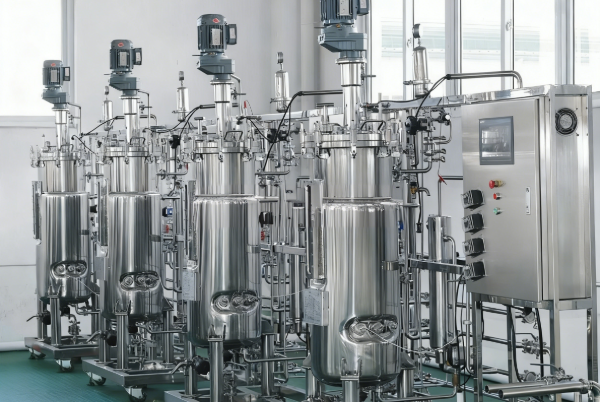
  • Row of automated stainless steel bioreactors with agitator motors and control panel inside a clean biopharmaceutical fermentation facility

    Chemical & Hydrogen Plant Solvents

    Purification of amine and advanced solvents in ammonia, hydrogen and synthesis gas CO₂ removal units.

    Industries:

    • Hydrogen

    • Ammonia

    • Solvents

    Extended

    Solvent Life

    Lower

    OPEX

    Compact

    Retrofit
  • Long row of stainless steel distillation and extraction vessels with piping and platforms inside a clean industrial processing workshop

    BECCS & DAC Solvent Management

    Solvent reclaiming and regeneration for BECCS (bioenergy with CCS) and DAC (direct air capture) plants.

    Industries:

    • BECCS

    • DAC

    • Next-Gen CCS

    High

    Solvent Availability

    Reduced

    Waste Streams

    30–50%

    Energy Savings
  • Typical CO₂ Capture Solvents & Streams

    Representative CO₂ capture solvents and side streams that VHPS hypergravity distillation can reclaim and regenerate in CCS/CCUS plants.
    Solvent / Stream
    Typical Source in CO₂ Capture
    Key Issues / Pollutants
    VHPS Treatment Goal
    Example Performance
    Lean / rich MEA, MDEA, DEA
    Post-combustion CO₂ absorption loops in power / industry
    Solvent degradation, oxidative by-products, corrosion species
    Reduce degradation products and metals, extend solvent life
    Fresh solvent make-up ↓ 30–60%; stable CO₂ loading
    Heat-stable salt–rich slipstream
    Side stream from amine circulation loop
    Heat-stable salts (HSS), metals, organic acids
    Remove HSS and metals while minimizing amine loss
    HSS ↓ significantly; solvent loss minimized; reclaim interval ↑
    Waste amine from batch reclaimer bottoms
    Conventional kettle reclaimer bottoms and off-spec amine waste
    High solids, degradation products, high COD
    Recover reusable amine, cut waste volume sent offsite
    Waste volume ↓ 50–80%; part of amine recovered
    Activated blends (PZ, AMP, etc.)
    Advanced post-combustion CO₂ capture solvents and blends
    Narrow composition window, degradation, viscosity increase
    Maintain blend ratio, remove degradation products, control viscosity
    Blend composition kept in spec; longer solvent lifetime
    CO₂ capture solvents with particulates
    Cement, steel, FGD-integrated flue gas CO₂ capture systems
    Dust, fly ash, metals, fouling and foaming tendency
    Remove particulates and metals, reduce fouling and foaming risk
    Reduced foaming events; longer run length between cleanings
    Physical / hybrid solvents
    Gas treating, syngas and hydrogen plants (e.g. Selexol-type)
    Heavy components, hydrocarbons, degradation products
    Purify solvent, recover valuable components, stabilize absorption performance
    Solvent purity improved; hydrocarbon losses ↓; stable operation
    Flue gas condensate & wash water
    Wash sections, quench and mist eliminator systems
    Amine carryover, organics, high COD
    Recover amine/organics, lower COD and emissions to wastewater / stack
    COD reduction 30–50%; amine recovery improving chemical balance
    Rich/lean amine with oxygen & SOx/NOx
    Flue gas with high O₂, SO₂, NOx content
    Oxidative degradation, sulfate/nitrate formation, corrosion
    Limit degradation products and corrosive species in circulation
    Degradation markers ↓; corrosion rate reduced

    System Configuration & Compliance

    Engineered systems designed for methanol handling with full EU compliance and safety standards.

    VHPS-HGD-1000

    0.5-1.0 t/h
    Methanol capacity
    Footprint:
    8-12 m²
    Height:
    6.5 m
    Power:
    45-65 kW

    Typical Applications:

    Lab scale
    Pilot production
    Small batch

    VHPS-HGD-2500

    1.5-2.5 t/h
    Methanol capacity
    Footprint:
    12-16 m²
    Height:
    7.2 m
    Power:
    85-120 kW

    Typical Applications:

    Medium production
    API synthesis
    Fine chemicals

    VHPS-HGD-5000

    3.0-5.0 t/h
    Methanol capacity
    Footprint:
    16-22 m²
    Height:
    8.0 m
    Power:
    150-220 kW

    Typical Applications:

    Large scale
    Biodiesel
    Continuous operation

    Installation & Commissioning

    Engineering

    Detailed engineering package with P&IDs, equipment specifications, and installation drawings.

    Delivery

    Skid-mounted delivery with pre-assembled components and factory testing completed.

    Installation

    On-site installation supervision with utility connections and safety system verification.

    Commissioning

    Performance testing, operator training, and performance guarantee validation.
    Download Technical Specifications

    In Our Partners' Words

    Discover why industry leaders trust us to solve their most complex separation challenges.

    James Peterson

    Chief Technology Officer

    "Faced with a challenging separation and limited plant space, we turned to Superdistillation. Their Supergravity Heat-Pump Distillation (HG-HPD) system was the perfect solution. The compact design saved us from a costly expansion, and the performance is outstanding—we’re achieving higher purity while our energy costs have dropped by over 60%. It’s a truly innovative technology backed by world-class engineering support."

    FAQs

    VHPS is typically installed as an add-on side-stream reclaimer to your existing absorber/stripper system. It focuses on solvent regeneration and reclaiming, removing degradation products and heat-stable salts while the main column continues to handle CO₂ absorption and stripping.

    In typical MEA/MDEA and blended amine systems, VHPS heat-pump distillation can cut energy use for solvent reclaiming by around 30–50%, reducing steam demand and overall CO₂ capture OPEX.

    Yes. VHPS is designed to treat heavily degraded amine, HSS-rich slipstreams, dust-laden solvents and waste amine. Hypergravity mass transfer and proper materials selection help manage fouling while recovering as much reusable solvent as practical.

    VHPS is delivered as a compact skid that connects to existing solvent tanks, lean/rich lines or conventional reclaimers with limited tie-ins. This allows you to upgrade solvent management and reduce waste with minimal civil work and short outages.


    Download Catalogue!

    Download our catalog to check all of our products and data sheet.

    Contact Form Demo
    The water treatment industry

    Get Instant Quote Now!

    Contact Form Demo

    Tagline

    Lorem ipsum

    Lorem ipsum dolor sit amet consectetur. Orci sollicitudin viverra mauris ac sed lectus morbi egestas. Urna massa ante in bibendum bibendum urna turpis eu.

    Contact Form Demo

    Leave Your Message Here

    Aliqua id fugiat nostrud irure ex duis ea quis id quis ad et.

    Contact Form Demo

    contact us

    Aliqua id fugiat nostrud irure ex duis ea quis id quis ad et.

    Contact Form Demo