DMF Recovery from PU Coating Lines
Recovery and purification of DMF from PU synthetic leather coagulation and coating exhaust condensate and wash water.
Industries:
DMF Recovery
PU Synthetic Leather
VOC Reduction
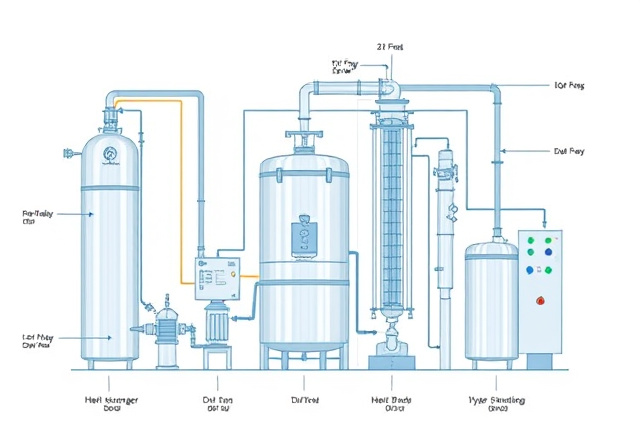
Specifically targets high-boiling solvents like DMF (153°C). The heat pump recycles latent heat, slashing steam consumption.
Reduces energy consumption by 40-60% vs. conventional distillation.
Wide flow channels and high shear forces allow the processing of viscous, solid-containing fluids (like chrome sludge) without scaling.
Ideal for concentrating high-salt, high-viscosity tanning wastes.
Fully enclosed, low-hold-up system minimizes the risk of toxic solvent leakage (DMF/VOCs).
Intrinsically safe operation for hazardous environments.

From cathode coating to electrolyte filling, we provide total solvent management.

Recovery and purification of DMF from PU synthetic leather coagulation and coating exhaust condensate and wash water.
DMF Recovery
PU Synthetic Leather
VOC Reduction

Recovery of MEK, ethyl acetate, butyl acetate, toluene/xylene from leather finishing and top-coat lines for reuse.
Solvent Loops
Finishing Lines
OPEX Saving

Concentration of high-COD, high-salt tanning and retanning effluents before biological treatment or ZLD.
High-COD
High-Salt
Wastewater

Recovery and concentration of organics from fatliquor, dye and retanning side streams to reduce sludge.
Fatliquor
Dye Liquors
Sludge Reduction

Concentration of chrome- and salt-rich pickling/tanning liquors for partial recycle and reduced disposal.
Chrome Streams
Concentration
Reuse

Treatment of VOC scrubber and washing liquors from finishing dryers to recover solvent and cut odor.
VOC Control
Scrubber
Odor
Solvent / Stream | Typical Source in Leather / PU Manufacturing | Key Issues / Pollutants | VHPS Treatment Goal | Example Performance |
DMF-rich coagulation & wash liquors | PU synthetic leather coagulation baths and wash water | High DMF loss, high COD, odor | Recover DMF for reuse, reduce COD and incineration / treatment cost | DMF purity ≥ 99.5%; recovery ≥ 98–99%; COD reduction 30–50% |
Coating solvents (MEK, ethyl/butyl acetate, toluene/xylene) | PU / leather finishing and top-coat lines | VOC emissions, solvent loss, high exhaust treatment OPEX | Recover coating solvents into a reusable blend and cut VOC load | Solvent recovery ≥ 95–99%; fresh solvent use ↓; VOC load reduced |
NMP / DMAC & other polar solvents | PU resin preparation, synthetic leather base-coats | High boiling point, energy demand, moisture pickup | Energy-efficient recovery and dehydration of NMP/DMAC for closed loops | Purity ≥ 99.0–99.5%; water lowered; steam use ↓ 30–50% |
Solvent-rich wash water & cleaning mixtures | Line cleaning, roller/knife washing, tank cleaning | Mixed solvents, high COD, variable composition | Recover reusable solvent fraction, reduce COD to ETP or external treatment | Solvent reuse fraction ↑; COD reduction 30–60%; waste volume ↓ |
High-COD / high-salt tanning & retanning effluents | Soaking, liming, tanning, retanning and finishing steps | High COD, salt, sulfides, surfactants | Concentrate and condition effluents before biological treatment or ZLD | Volume reduction 50–80%; COD reduction 30–50% |
Fatliquor, dye & retanning liquors | Fatliquoring, dyeing, retanning side streams | High organics, color, sludge generation | Concentrate organics, reduce sludge, enable partial recovery or safer disposal | Sludge volume ↓ 30–50%; organics recovery ≥ 70–80% |
Chrome & pickling liquors | Chrome tanning and pickling processes | High chrome and salt, long-term environmental liability | Concentrate chrome- and salt-rich streams for partial recycle or minimized waste | Volume reduction ≥ 70%; chrome enrichment; disposal cost reduced |
VOC scrubber / washer liquors | VOC scrubbers on finishing ovens and drying lines | Dissolved solvents, odor, COD, VOC carry-over | Recover solvents, cut COD and odor, reduce VOC emissions from leather finishing | Solvent recovery ≥ 95%; VOC / odor complaints reduced |

Discover why industry leaders trust us to solve their most complex separation challenges.
Yes. VHPS recovers DMF and finishing solvents from exhaust condensate and wash water, cutting VOC emissions and fresh solvent demand, which supports compliance with tighter DMF and VOC limits.
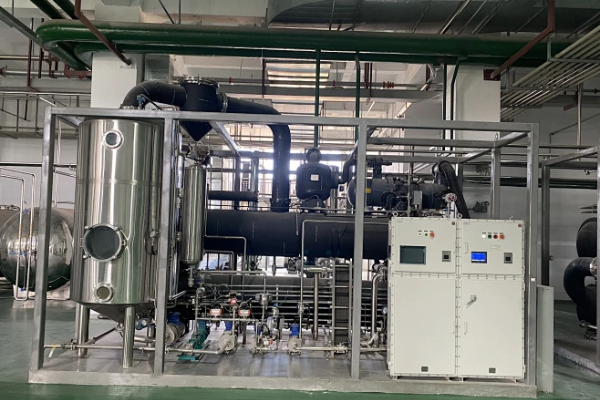
VHPS is supplied as a compact skid that connects to exhaust condensate tanks, wash water, solvent storage and ETP systems. This makes it suitable for retrofits in existing tanneries and synthetic leather plants.
Typical projects achieve ≥95–99% solvent recovery with 30–50% lower energy use than conventional evaporation, plus reduced incineration and wastewater treatment costs.
Yes. VHPS can be configured either for solvent recovery (DMF, MEK, esters, aromatics) or for high-COD, high-salt effluent concentration as a side-stream to your tannery ETP or ZLD system.